Herringbone flooring has been making statements in interiors for over four centuries. In 2026, it’s showing absolutely no signs of slowing down. From hallways in period homes across Surrey and Sussex to kitchen extensions in contemporary new-builds, the zigzag pattern remains one of the most requested styles we see. But what is it about herringbone that keeps drawing people back, and does it still hold up as a design choice this year? The short answer is yes, and here’s why.
A Pattern Built to Last: The History Behind Herringbone
You don’t get to stick around for 500 years without being genuinely good. The herringbone pattern first appeared in wooden flooring in the 16th century, with one of the earliest examples installed at the Chateau de Fontainebleau in 1539. Before that, the Romans used the same interlocking brick layout for road construction, a technique they called opus spicatum (‘spiked work’), and some of those roads still exist today.
French nobility adopted it enthusiastically in the 1600s, and parquetry spread across Western Europe through the 17th and 18th centuries, adorning the floors of palaces and estates. A pattern favoured by Versailles has a certain pedigree that’s hard to argue with.
It fell out of fashion briefly during the mid-20th century when synthetic carpets offered a cheaper alternative, but the bones were always there, quite literally, under the carpet. Since the 1980s, hardwood floors have made a sustained comeback, and herringbone has led that resurgence.
What Makes Herringbone So Enduring?
Part of its appeal is purely visual. The alternating rectangular blocks, offset at 90 degrees, create a sense of movement and rhythm that plain plank floors simply can’t match. It draws the eye through a room, makes narrow spaces feel wider, and adds a layer of craftsmanship to any interior.
There’s also the structural argument. The interlocking nature of herringbone means the floor is remarkably stable underfoot. It’s not a gimmick pattern thrown on top of a standard laying method. It’s a layout with genuine structural logic behind it, which is part of why it has remained popular across both traditional and contemporary interiors for so long.
And unlike many design trends that are closely tied to a particular decade or aesthetic, herringbone adapts. It works in a Georgian terrace just as well as a minimalist open-plan kitchen. That flexibility is rare.
Herringbone in 2026: What’s Changed?
The pattern isn’t new, but the way people are using it in 2026 has evolved in some interesting directions.
Warmer Tones Are In
The cool grey and pale bleached finishes that dominated the early 2020s are giving way to warmer, more organic palettes. Honey, caramel, and “greige” tones are now some of the most requested shades, particularly in engineered oak. These warmer hues complement the broader interior shift toward natural materials and a lived-in, quiet luxury aesthetic.
Larger Plank Formats
Standard herringbone blocks around 70mm x 350mm remain a classic, but larger formats of 120mm x 600mm are gaining significant traction this year. Wider planks reduce the number of joins across the floor, which makes a room feel less busy and more expansive, especially useful in smaller spaces.
Matte and Brushed Finishes
High-gloss finishes feel dated in 2026. Matte, oiled, and brushed finishes are leading the design conversation because they let the grain and natural character of the wood speak for themselves. They’re also more practical; a brushed oak floor in a busy household is far more forgiving than a high-shine surface.
Engineered Oak Is the Practical Choice
Engineered wood herringbone is particularly popular right now, and for good reason. It offers the warmth and authenticity of real wood but with greater dimensional stability, making it suitable for homes with underfloor heating and open-plan spaces where temperature fluctuations are more pronounced. Demand for engineered herringbone is expected to continue rising through 2026 as homeowners look for the look of traditional hardwood without the maintenance demands.
At Just Wood, our oak range includes options in both solid and engineered formats, giving you the flexibility to choose what works best for your space and lifestyle. You can browse our oak flooring collection to explore what’s available.
Herringbone vs Chevron: Which Should You Choose?
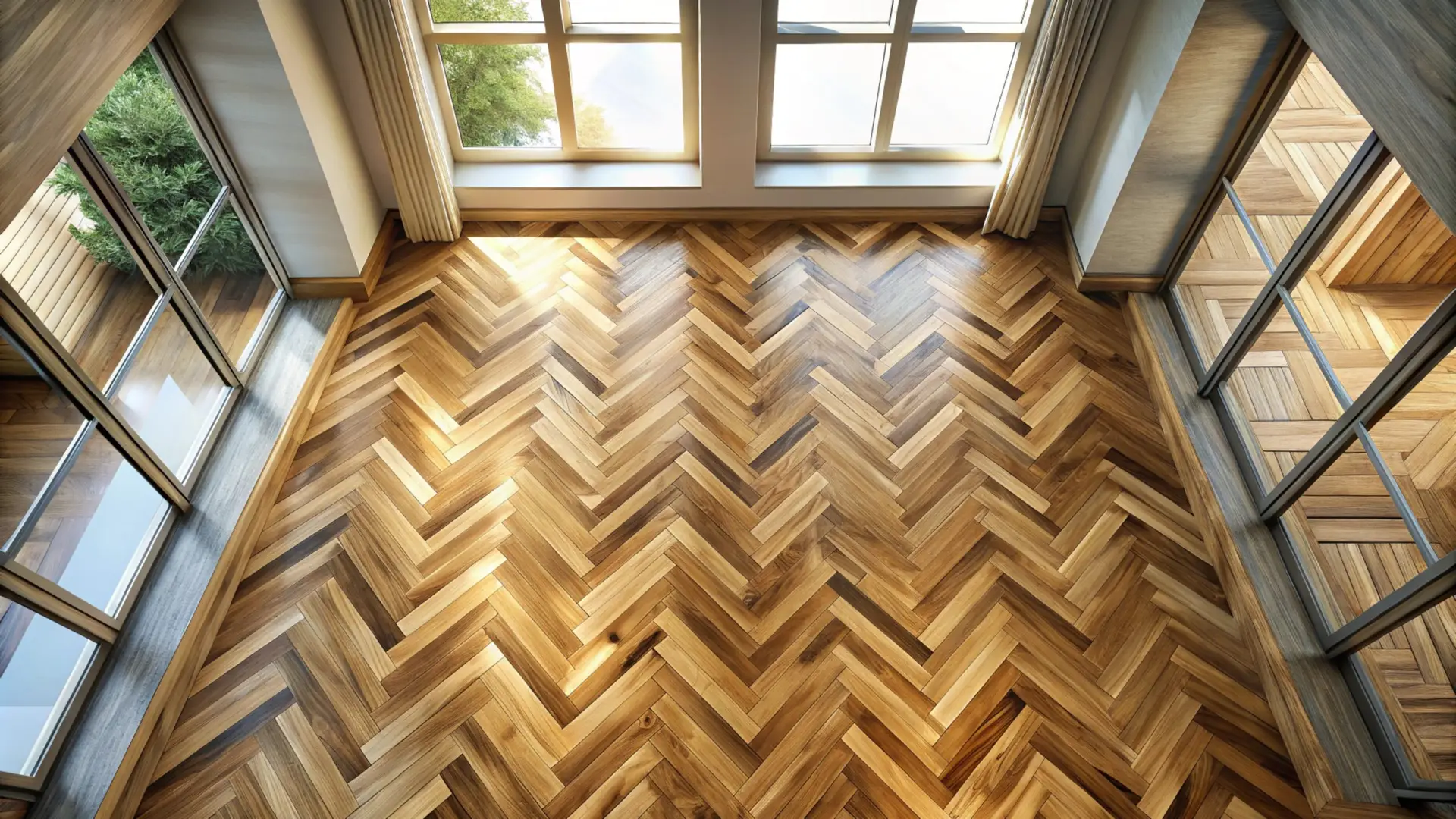
It’s easy to confuse herringbone with chevron since both use a V-shaped repetitive layout, but there’s a meaningful difference. Herringbone uses rectangular planks laid at 90 degrees, with the end of one plank meeting the side of another to create a staggered zigzag. Chevron planks are cut at a 45-degree angle so they meet at a point, forming a more continuous, arrow-like pattern.
Herringbone tends to give a more traditional, heritage feel. Chevron reads as slightly more modern and geometric. Both are excellent choices, but if you’re unsure which suits your space, bring samples into the room and live with them for a few days before committing.
Where Does Herringbone Work Best?
Herringbone suits almost any room, but it particularly shines in a few key areas.
Hallways: The pattern draws the eye forward, elongating the space and making a strong first impression.
Open-plan kitchens and living areas: The movement in the pattern adds visual interest across a large floor without feeling chaotic.
Studies and dining rooms: Darker finishes like smoked or walnut herringbone work beautifully here, adding warmth and a sense of occasion.
One thing to bear in mind with smaller rooms is plank scale. A very small block in a very large room can look fussy; a large block in a very small room can overwhelm. Getting the proportions right makes a significant difference to the final result, which is where professional advice pays off.
Is Herringbone a Good Investment?
Herringbone flooring is generally more expensive than straight-lay options, both in materials and installation time. The precision required to lay it correctly means that specialist fitting is strongly recommended. Improper installation can result in visible gaps, uneven boards, or asymmetrical lines, which defeats the purpose of choosing such a striking pattern.
But the investment holds. Herringbone flooring can increase property value thanks to its luxurious appearance and timeless quality. Unlike a bold colour or statement tile that may date quickly, a well-laid hardwood herringbone floor looks as good in ten years as it does the day it goes down. That’s precisely why interior designers and architects continue to specify it.
If you’re considering new flooring and want something that offers genuine longevity rather than trend-chasing, herringbone is one of the safest choices you can make. Get in touch with the Just Wood team to discuss your project [link to your contact or services page] and we can advise on the right timber species, finish, and plank size for your space.
FAQs
Is herringbone flooring going out of fashion?
Not at all. Herringbone has been a staple of high-end interior design since the 16th century and continues to be one of the most popular flooring requests in 2026. Its ability to work across both traditional and contemporary interiors makes it far more durable as a design choice than most trends.
What is the difference between herringbone and chevron flooring?
Herringbone uses rectangular planks laid at 90 degrees to each other, with the end of one plank meeting the side of the next. Chevron planks are cut at an angle so they meet at a point, creating a clean V-shape. Herringbone has a more staggered, organic feel; chevron is slightly sharper and more geometric.
Is herringbone flooring more expensive to install?
Yes, typically. The precision required to lay herringbone correctly takes more time than straight-lay flooring, and you should budget for around 10 to 20 percent more wastage depending on room size. Professional fitting is strongly recommended to ensure the pattern stays true and the finish looks its best.
What wood species works best for herringbone flooring?
Oak is by far the most popular choice for herringbone in the UK, offering a good balance of hardness, grain character, and versatility across finishes. Walnut works beautifully for darker, richer interiors. The right choice depends on your existing decor, natural light levels, and how much foot traffic the space sees.
Can herringbone flooring be used with underfloor heating?
Yes, particularly engineered herringbone. Engineered wood has a multi-layer construction that makes it less prone to expansion and contraction with temperature changes, making it a more suitable choice for rooms with underfloor heating than solid wood in most cases. Always confirm compatibility with your specific product and heating system.