Mon: Fri 9am – 5:30pm | Sat: 9am – 4pm
Worn finishes, grey patches, scratches and gaps between boards don’t mean your wood floor needs replacing. In most cases, professional floor sanding takes the surface back to clean, bare timber, ready for a fresh finish that looks and performs like new. Just Wood has been sanding, refinishing and fitting wood floors since 1993, working from our base in Bognor Regis across Sussex, Surrey and Hampshire.
We sand and refinish all kinds of wooden floors in homes from Brighton and Worthing to Chichester, Guildford and beyond, including:
• Solid hardwood floors, including oak, walnut, ash and maple
• Engineered wood flooring with a thick enough wear layer
• Parquet and herringbone floors, including original block parquet
• Original pine floorboards in period properties
Every job starts with a site visit. We check the condition of the floor, the type of timber and how much wood is left to sand, then recommend the right approach before any work begins.
1. Survey and preparation. We assess the floor, punch down protruding nails, secure loose boards and protect skirting, doorways and adjoining rooms.
2. Sanding in stages. Using commercial-grade sanding machines, we work from a coarse grit that removes the old finish and surface damage through to finer grits for a smooth, even surface.
3. Edges and corners. An edging sander and hand tools reach the perimeter, corners and around pipes, so the whole floor finishes evenly, not just the open middle of the room.
4. Gap filling and repairs. Gaps are filled and any damaged boards or parquet blocks are repaired or replaced (see below).
5. Staining (optional). If you’d like a new colour, we apply a stain once the floor is sanded.
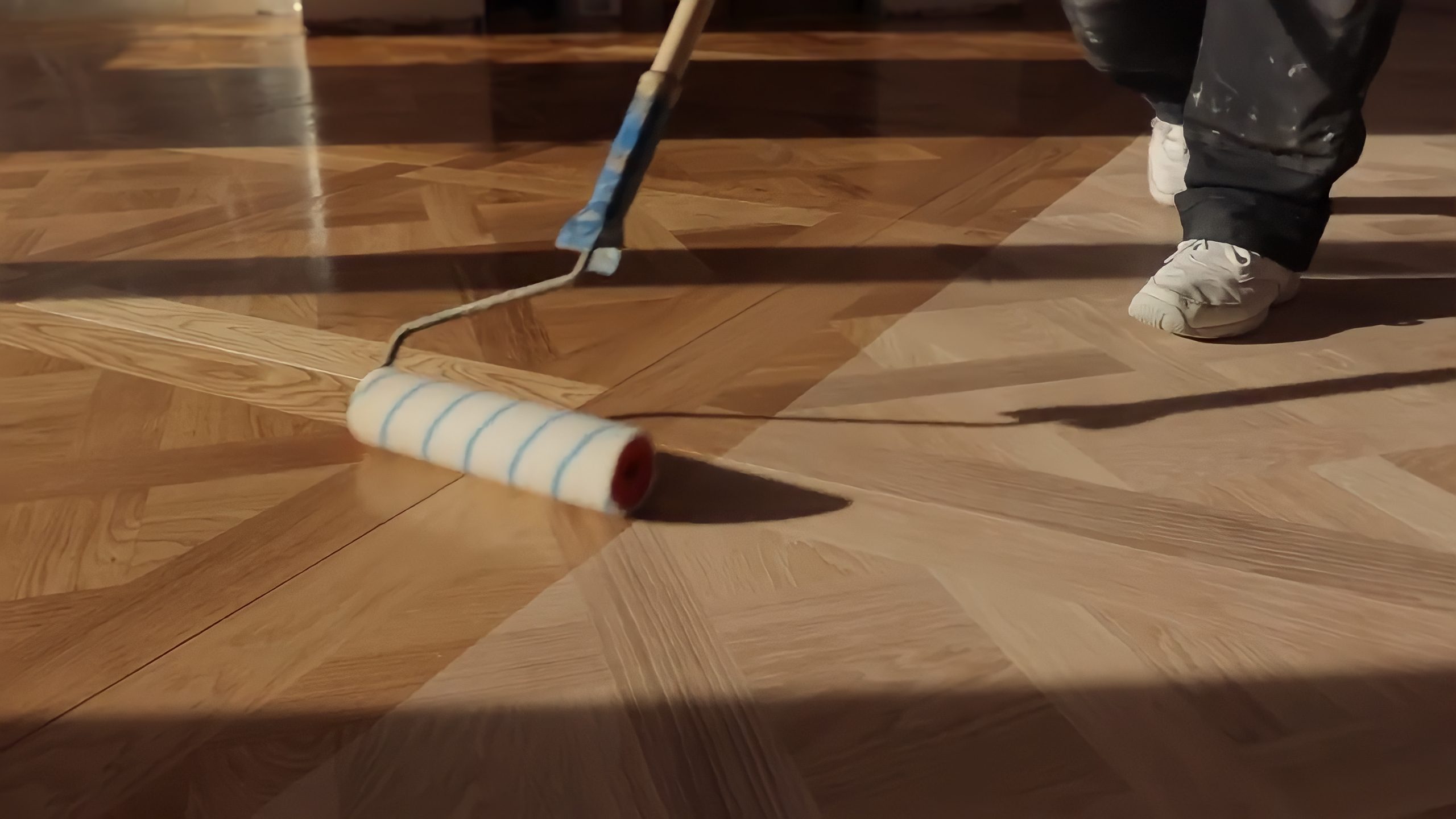
6. Finishing. We apply your chosen lacquer or oil in several coats, lightly abrading between coats for a smooth, durable result.
Gaps between boards are common, especially in older floors and homes with central or underfloor heating, because timber naturally expands and contracts as humidity changes. As well as looking untidy, open gaps let in draughts, collect dirt and can make a room feel colder.
For narrower gaps, we use a resin-based filler mixed with fine sanding dust from your own floor, so the filled joints blend in with the surrounding timber. For wider gaps, usually in old pine floorboards, we glue in thin slivers of matching wood and plane them flush for a more natural finish. To understand why gaps open up, read our guide to summer heat and wood floor movement.
We use professional finishes from trusted brands such as Bona and Junckers, and we’ll show you samples so the finished floor suits your room.
Solid wood floors can usually be sanded many times over their lifetime. Engineered wood flooring can be sanded too, but only if its top layer of real wood (the wear layer) is thick enough. As a rough guide, a wear layer of around 3mm or more will usually allow at least one full sand, while thinner wear layers may only suit a light abrade and recoat. Find out more in What Is Engineered Wood Flooring Made Of?
Laminate and most vinyl floors can’t be sanded. If you’re not sure what you have, we’ll check during the site visit.
Floor sanding is usually priced per square metre. The final cost depends on:
• The size of the area
• The floor’s condition, such as deep scratches, old paint or varnish, or staining
• How much gap filling or board repair is needed
• The type of floor, as parquet and herringbone take more care than straight boards
• The finish you choose and the number of coats
• Access and furniture moving
We give a free, no-obligation quote once we’ve seen the floor.
An average room is usually sanded and finished within one to three days, depending on size, condition and finish. Most lacquered floors can take light foot traffic after around 24 hours, but it’s best to wait a few days before moving furniture back and longer before laying rugs while the finish fully cures. We’ll give you exact timings for the products used on your floor.
If your floor has deeper problems, such as water damage, loose or rotten boards or missing parquet blocks, sanding alone may not be enough. Our wood floor restoration service covers repairs as well as refinishing, and our guide to restoration vs replacement helps you weigh up the options. For light surface marks, see How to Remove Scratches from Wood Flooring, and for a deeper look at the process, read our complete guide to wooden floor refinishing.
See finished floors in our gallery and portfolio, or read what customers say on our Awards & Testimonials page.
Professional sanding machines have built-in dust extraction that captures most of the dust as we work, and we sheet off doorways to protect the rest of your home. A little fine dust is unavoidable, so we vacuum thoroughly before applying any finish.
Yes, in most cases. You’ll need to keep off the room being worked on until the finish is dry, and we plan the work so you keep access to the rest of your home.
Most floors in homes only need a full sand every 10 years or so, depending on foot traffic and care. A maintenance recoat every few years can extend that further.
Yes. Parquet floor sanding needs extra care because the blocks run in different directions, and we regularly restore original parquet. See our parquet wood flooring page.
Sweep or vacuum regularly, use a damp (not wet) mop with a cleaner made for your finish, and fit felt pads under furniture. Our cleaning and maintenance guide has more detail.
Ready to bring your wood floor back to its best? Call us on 01243 827888 or get in touch online to arrange a free, no-obligation quote for floor sanding, gap filling and refinishing anywhere in Sussex, Surrey and Hampshire.