When summer finally arrives, it brings more than sunshine. For anyone with a solid or engineered wood floor, the warmer months introduce a real risk of expansion, gaps, and movement that can catch homeowners off guard. Understanding why this happens, and what you can do to manage it, can save your floor from lasting damage.
Wood is a hygroscopic material. That means it naturally absorbs and releases moisture from the air around it. As temperatures rise and humidity levels shift through the summer, your floor responds by expanding and, in some conditions, contracting. Neither process is inherently a problem, but if your floor has been poorly installed, under-maintained, or fitted without adequate expansion allowances, the consequences can become visible very quickly.
Why Summer Causes Wood Floor Gaps and Movement
The UK summer is less extreme than many climates, but it still creates meaningful humidity swings. Indoor humidity levels above 55% prompt wood fibres to absorb moisture from the air and swell. When this happens across a floor fitted without adequate expansion gaps, the boards have nowhere to go except upwards, causing buckling or cupping along the edges.
On the flip side, if you run air conditioning to cool your home, the drier air can cause boards to release moisture and shrink, opening gaps between planks. According to Surrey Floor Restoration, keeping indoor humidity between 35% and 55% and an ambient temperature around 20 to 22 degrees Celsius provides the most stable environment for your wood floor throughout summer.
The key driver here is not temperature in isolation, but the interaction between temperature and moisture in the air. A hot, dry spell pulls moisture out of boards. A warm, humid period pushes it back in. Without consistency, your floor is constantly working to adjust.
Common Summer Problems: What to Look Out For
Cupping
Cupping occurs when the edges of boards rise higher than the centre, creating a curved profile across the width of each plank. It typically happens when the top surface of a board absorbs more moisture than the underside. High indoor humidity is usually the cause, but moisture rising from a subfloor can also be responsible. Do not sand a cupped floor. The boards often flatten naturally once conditions stabilise.
Buckling
More serious than cupping, buckling is where boards lift entirely off the subfloor. This usually happens when swelling boards have no room to expand outward, often because the expansion gap around the perimeter of the room is too small or has been covered by skirting fitted too tightly. Wood Floor Warehouse notes that standard expansion gaps should be 10 to 12mm, and the floor must not touch any obstacle around the perimeter. Even a single doorframe with no clearance can cause the whole floor to rise in humid conditions.
Gaps Between Boards
While gaps are more commonly associated with winter, they can appear in summer too if air conditioning creates an artificially dry indoor environment. Small gaps that close in the warmer months are considered normal seasonal movement. Persistent or widening gaps in summer, however, suggest a bigger problem that warrants professional inspection.
Solid Wood vs Engineered Wood: Which Handles Summer Better?
This is one of the most important questions to understand, because the two floor types respond very differently to seasonal change. Solid wood is milled from a single piece of timber, and it reacts directly to every shift in humidity. Wider boards move more, and Yazco Carpets point out that wide solid oak planks at 180mm or more are particularly prone to movement in UK homes. The thicker and wider the plank, the more pronounced the expansion and contraction will be.
Engineered wood, by contrast, is constructed with a real hardwood top layer bonded to a core of cross-layered plywood. Because each layer is oriented in a different direction, they counteract each other’s natural tendency to expand or contract. The result is a floor that is considerably more dimensionally stable through summer humidity swings. Wood Floor Warehouse estimate that engineered wood reduces movement by around 70% compared to solid wood, making it the more practical choice for rooms with variable temperature and humidity, such as kitchen diners, conservatories, or any space that heats up significantly in summer.
That said, engineered wood is not immune. Large humidity swings can still cause it to cup or gap if conditions fall outside the manufacturer’s recommended range, which is typically 35% to 55% relative humidity. The floor type matters, but climate control matters too. [link to your page on engineered wood flooring]
How to Prevent Gaps and Movement in Summer
Control Indoor Humidity
A hygrometer costs very little and gives you an accurate real-time reading of your indoor humidity level. If it consistently reads above 55% during summer, a dehumidifier will help bring it back into the safe range. On the other hand, if air conditioning is drying the air too much, a humidifier will protect against excessive contraction and gaps. The target range recommended by most flooring manufacturers and industry bodies, including Floorsave, is 35% to 55% relative humidity year-round.
Protect from Direct Sunlight
UV rays cause fading and discolouration over time, and south-facing rooms can also create localised hot spots on the floor that affect the finish. Fitting UV-filtering window film, using blinds during the hottest part of the day, and rotating rugs periodically so the floor tans evenly all help reduce sun-related wear. When your floor is eventually refinished, choose an oil or lacquer with built-in UV protection.
Keep Moisture Off the Floor
Summer means more foot traffic in and out of the garden, and with it comes wet feet, mud, and moisture tracked across your floor. Place absorbent mats at any external door. Wipe up spills immediately. Avoid steam mops on wood or engineered floors at any time of year, but be especially cautious in summer when ambient humidity is already elevated. Clean with a lightly dampened mop rather than a wet one, and always dry the surface as you go.
Ensure Adequate Expansion Gaps Exist
If your floor was installed without proper expansion gaps, there is limited recourse once buckling has started. However, if you are planning a new installation or renovation, this is non-negotiable. A 10 to 12mm gap must be maintained around the full perimeter of the room, under skirting boards and around any fixed obstacles such as doorframes, pipes, or kitchen units. For large open-plan areas, hidden expansion gaps or floating saddles across doorways may be required too.
Acclimatise New Flooring Before Installation
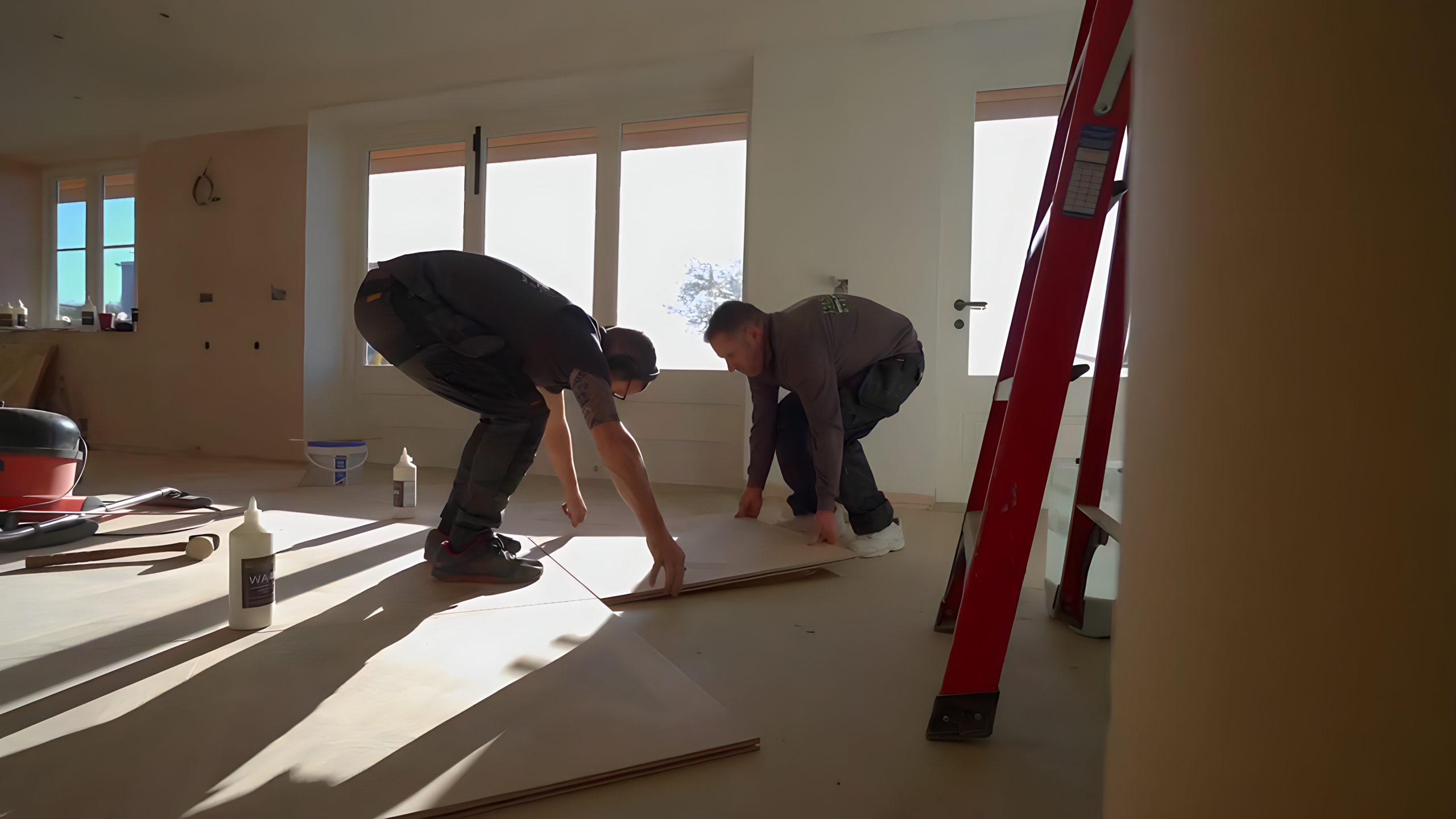
If you are having a new floor laid in summer, the timber must be left in the room where it will be installed before fitting begins. This allows the boards to reach equilibrium with the ambient temperature and humidity of that specific space. For solid wood, two to three weeks is generally recommended. For engineered wood, one to two weeks is usually sufficient, though you should always defer to the manufacturer’s guidelines.
When to Call a Professional
Minor seasonal movement, small gaps that close again in humid weather, and boards that feel slightly springy in very hot weather are all within the range of normal behaviour. You do not need to panic, and you definitely should not reach for a filler or a sander before conditions have had a chance to stabilise.
However, you should get a professional inspection if boards are visibly lifting off the subfloor, if gaps are wider than 2mm and not closing, if cupping does not resolve after several weeks, or if you can hear significant squeaking and movement underfoot. Attempting to sand a cupped or buckled floor before moisture has returned to normal will leave you with peaks and uneven sections once the boards do flatten out.
Just Wood has been installing and restoring hardwood floors across Surrey, Sussex, and Hampshire since 1993. If you are concerned about your floor’s condition this summer, [link to your contact page] to arrange a survey.
FAQs
Why do my wood floors have gaps in summer?
Gaps in summer are usually caused by air conditioning or unusual dry spells that lower indoor humidity and cause the boards to release moisture and contract. Small gaps are normal and often close again when conditions become more humid. Persistent or wide gaps may indicate the floor was installed without adequate acclimatisation or that humidity control in the room is poor.
Should I fill gaps in my wood floor during summer?
Generally no, at least not with a rigid filler. If the gaps are seasonal, a rigid filler will simply be compressed and cracked out again when the boards re-expand. If you want to fill gaps, use a flexible filler designed for moving hardwood joints, or speak to a flooring professional about whether filling is appropriate for your specific floor type and situation.
Can humidity cause my wood floor to buckle in summer?
Yes. If indoor humidity rises consistently above 55%, boards absorb moisture and expand. If there is no room for them to expand outward because the perimeter expansion gap is too small or covered, the floor will buckle upward. This is more common in larger open-plan rooms and can be triggered by a single obstacle preventing outward movement at just one point in the floor.
Is engineered wood flooring better than solid wood for summer movement?
In most UK homes, yes. Engineered wood’s cross-ply plywood core reduces dimensional movement by a significant margin compared to solid timber, making it a more stable choice in rooms where temperature and humidity can fluctuate through the warmer months. That said, both types benefit from consistent climate control and proper installation.
What humidity level should I maintain for wood floors in summer?
The recommended range for most wood and engineered wood floors is between 35% and 55% relative humidity. A basic hygrometer will let you monitor your indoor levels accurately. Use a dehumidifier if readings regularly exceed 55%, and a humidifier if air conditioning is drying the air below 35%