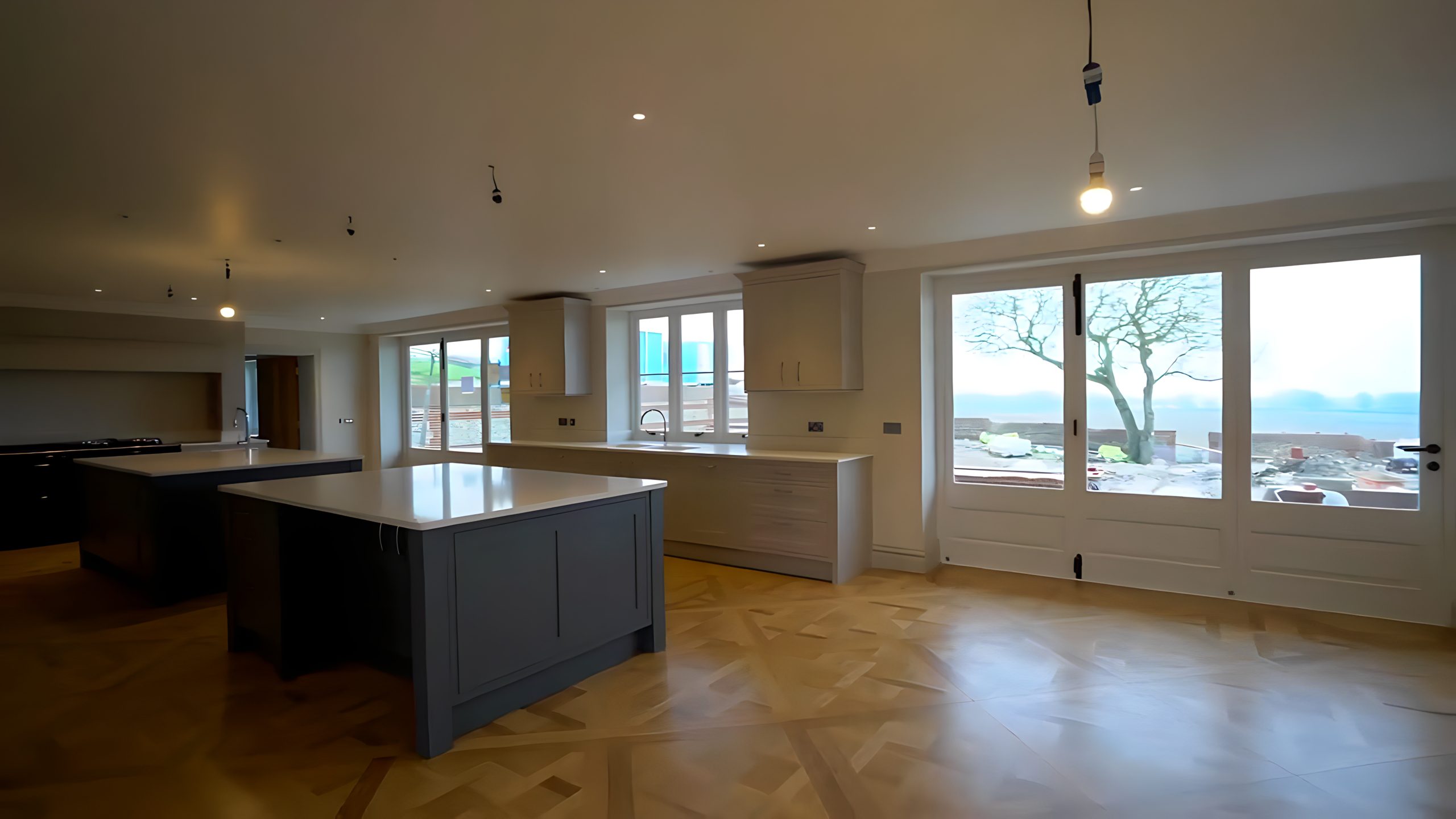

If you’re planning underfloor heating (UFH) for a room and want a wood finish, the short answer is that engineered wood flooring, and engineered oak in particular, is the best wood flooring for underfloor heating. Its layered, cross grain construction resists the swelling and shrinking that solid wood suffers from as the floor temperature rises and falls, while still giving you a genuine hardwood surface rather than a laminate imitation.
That doesn’t mean every engineered board will work, or that solid wood is automatically off the table. The right choice depends on the species, the board thickness, the moisture content at the time of laying and how carefully the heating system is commissioned before the floor goes down. Here’s what actually matters when you’re choosing wood flooring for a heated floor.
Why Engineered Wood Is the Best Choice for Underfloor Heating
Engineered wood flooring is built from a real hardwood wear layer bonded on top of several layers of plywood, with the grain of each layer running in a different direction. That cross ply structure holds the board flat and stable as temperatures change, which is exactly the stress that underfloor heating puts on a floor all year round. It’s why we cover the construction in more detail in our guide to what engineered wood flooring is actually made of.
Thickness and density matter too. Warmup notes that the thinner and denser a board is, the faster heat passes through it, which means quicker warm up times and a more responsive system. Most engineered boards designed for UFH sit between 14mm and 18mm overall, with a 3 to 4mm hardwood wear layer, striking a balance between heat transfer and a floor that can still be sanded and refinished in future.
If you’re still weighing up solid versus engineered for your project generally, our full comparison of engineered versus solid wood flooring covers cost, lifespan and appearance beyond just heating performance.
Can You Use Solid Wood Flooring With Underfloor Heating At All?
Yes, but with more caveats than engineered wood. According to TRADA’s technical guidance, solid timber can be used over underfloor heating, but species selection should be limited to those classified as small movement in British Standard BS 8201, and particular attention needs to be paid to board width and moisture content at the time of laying. Wider boards move more as they heat and cool, so narrower solid boards are generally a safer bet over UFH than wide plank solid floors.
Quarter sawn boards are also worth asking your supplier about if you want solid wood specifically. The cut reduces the tendency for boards to bow or cup as moisture content shifts, which makes it a more forgiving option where the floor sits directly over a heat source.
Best Wood Species for Underfloor Heating
Not every species behaves the same way once it’s sitting over a heat source. Here’s how the options we work with most often compare.
Oak
Oak is the benchmark choice for underfloor heating. It’s dense, dimensionally stable and classed as small movement, which is exactly what TRADA’s guidance calls for. Engineered oak in particular copes very well with the daily heating cycles of a UFH system. Browse our oak flooring range for options suited to heated floors.
Walnut
Walnut is beautiful but naturally more reactive to changes in humidity and temperature than oak. It can still be used over underfloor heating in engineered form, but it needs careful acclimatisation and a supplier who can confirm the moisture content before laying. Take a look at our walnut flooring if you want the darker, richer tone walnut gives.
Ash
Ash is light in colour, reasonably dense and generally well behaved over heated floors, making it a good middle ground between oak’s stability and walnut’s character. See our ash flooring options.
Maple, Beech and Cherry
Maple and beech are both dense hardwoods that can work well in engineered form over UFH, though maple in particular can be more prone to visible movement than oak, so it pays to check the manufacturer’s specific UFH guidance for the exact board you’re considering. Cherry sits somewhere in the middle. You can find all three in our maple, beech and cherry ranges.
The Technical Requirements Your Floor Needs to Meet
Whichever species you choose, a handful of technical details make the difference between a floor that performs for decades and one that gaps, cups or cracks within a year or two.
- Moisture content: Hardwood flooring typically leaves the factory at 9 to 11 percent moisture content. For installation over underfloor heating, industry guidance recommends bringing this down to around 8 to 9 percent before the floor is laid, and checking it on site rather than assuming the factory figure still applies.
- Surface temperature: The top surface of the wood should never exceed 27°C. Going above this risks excessive gapping between boards as the wood dries out too quickly. A dedicated floor probe or thermostat, rather than relying on flow valves alone, is the reliable way to enforce this limit.
- Room conditions during acclimatisation: Boards generally need to sit in the room at 18 to 20°C with relative humidity between 40 and 60 percent before fitting, so the wood settles to the conditions it will actually live in.
- Subfloor levelness: The subfloor needs to be flat, dry and free of dust before laying, with a maximum deviation of around 3mm measured over a 2 metre straight edge, in line with BS 8204.
How to Install Wood Flooring Over Underfloor Heating
Getting the sequencing right matters as much as the flooring choice itself. A wet, hot water UFH system should be commissioned and run for at least 21 days before the wood floor goes down, starting at a low temperature and increasing gradually before easing back down again, so the screed dries out fully and evenly. Skipping this step is one of the most common causes of floor failure, because moisture trapped in the screed has nowhere to go once the wood is sealed on top of it.
Once the floor is fitted, the same gradual approach applies in reverse. Bring the heating back up slowly over several days rather than switching straight to full output, and keep the system ticking over at a low background level through the summer rather than turning it off completely, since large swings between hot and cold cause more movement than a steady, moderate temperature.
Glue down installation is generally recommended over floating floors for underfloor heating, since direct contact with the subfloor improves heat transfer and reduces the air gaps that can slow a system down. Your installer will be able to advise on the right method for your specific subfloor and heating system.
Common Mistakes That Cause Gaps, Cupping and Cracking
- Laying the floor before the heating system has been fully commissioned and dried out.
- Switching underfloor heating on and off abruptly rather than adjusting it gradually.
- Choosing a wide plank solid board where a narrower or engineered option would be more stable.
- Ignoring the manufacturer’s specific moisture content and thickness guidance for that particular product.
- Relying on the boiler thermostat alone instead of a floor sensor to cap the surface temperature at 27°C.
The right combination of species, construction and installation sequencing means you don’t have to choose between a warm floor and a genuine wood one. If you’re planning a project with underfloor heating, our team can talk you through which of our solid and engineered hardwood options will suit your subfloor and heating system, and you can find more specification detail on our technical information page. Get in touch via our contact page for tailored advice on your floor.
FAQs
Is solid wood flooring suitable for underfloor heating?
It can be, but it’s more demanding than engineered wood. TRADA guidance recommends sticking to small movement species under BS 8201, using narrower boards and controlling moisture content carefully. Engineered wood is generally the more forgiving and reliable option for most UFH projects.
What is the maximum floor temperature for wood flooring with underfloor heating?
The surface temperature of the wood should not exceed 27°C. Going higher risks drying the boards out too fast, which leads to gaps opening up between them. A floor sensor rather than a boiler thermostat is the most reliable way to hold this limit.
Does oak or walnut work better with underfloor heating?
Oak is the more stable option because of its density and small movement classification. Walnut can still be used in engineered form but is more sensitive to changes in humidity and temperature, so it needs closer attention to acclimatisation and moisture content.
Should I glue down or float my wood floor over underfloor heating?
Glue down installation is usually recommended because direct contact with the subfloor improves heat transfer. Floating floors can still work but may heat up slightly more slowly due to the air gaps involved.
How long does wood flooring need to acclimatise before fitting over underfloor heating?
Boards typically need to sit in the room at 18 to 20°C and 40 to 60 percent relative humidity for at least a few days before fitting, though exact timings vary by product. Always check the manufacturer’s specific guidance, and make sure the heating system itself has already been commissioned and dried out before the floor goes down.