A century ago, laying a wood floor meant a hammer, a handsaw and days spent on your knees. Today a fitter might glue engineered boards over underfloor heating, sand with a machine that captures most of its own dust, and finish with a hardwax oil that cures overnight. Flooring techniques have changed more in the last 100 years than in the several centuries before them, and those changes affect how older floors should be repaired today.
We’ve already looked at how the materials themselves have moved on in our guide to traditional vs modern wood flooring. This post focuses on the craft: the techniques fitters actually use, decade by decade, and why knowing them helps if you own an older floor.
The 1920s: Hand Tools and Hard Graft
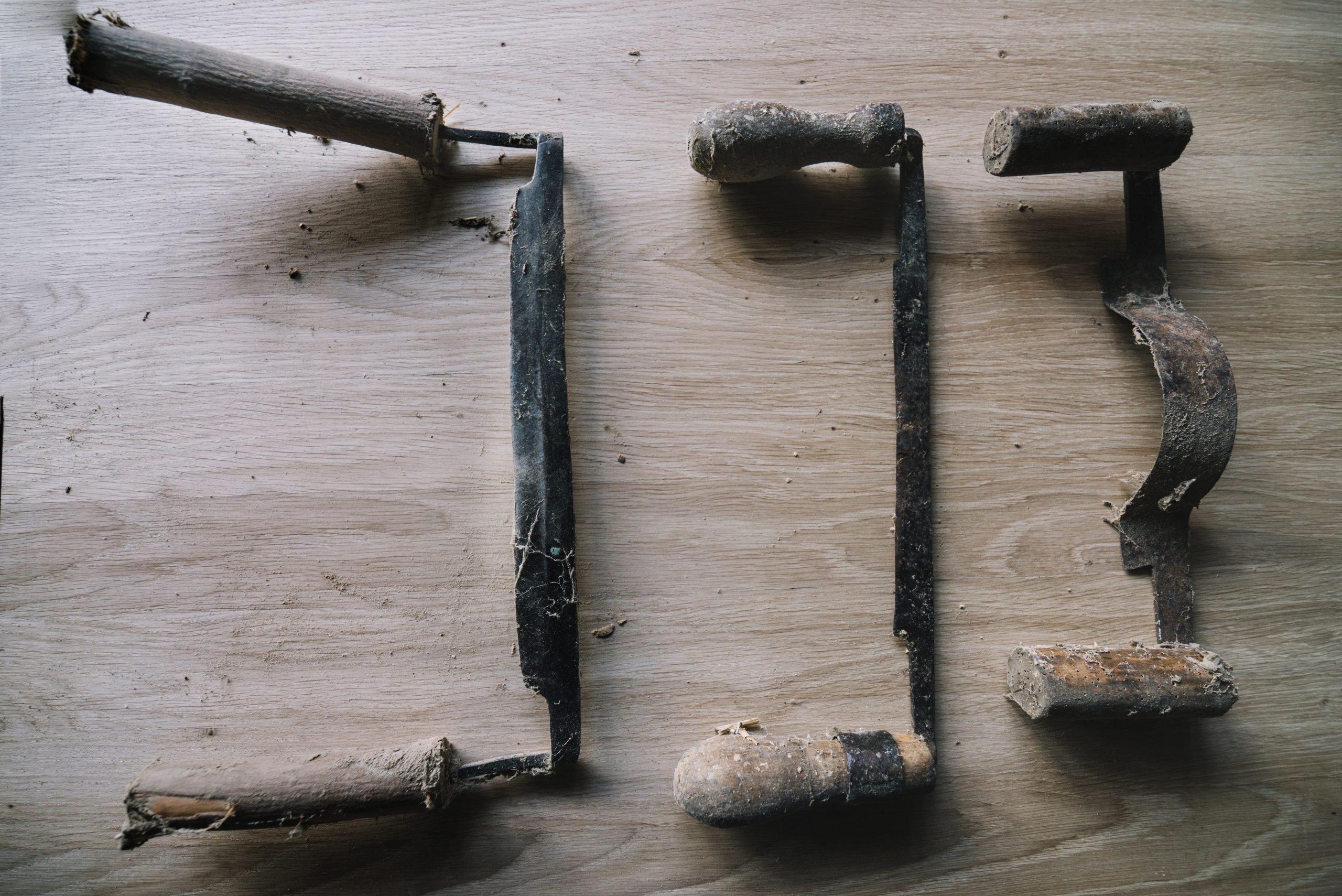
In the early decades of the century, installers cut and blind-nailed flooring by hand, using little more than hatchets and hammers. Smoothing the floor once it was down was even harder work. Floor men scraped the surface by hand while kneeling, and although a scraping machine was patented in 1924, it sold poorly because electric sanders were arriving at the same time.
The first motorised floor sander had actually been patented back in 1909, but it took decades for powered sanding to become normal practice on every job.
Underneath, most British homes still had suspended timber ground floors. Construction did improve, though. By the 1920s, joists were regularly carried on honeycombed sleeper walls and kept clear of external walls, which let air circulate and kept damp away from the timber. Plenty of the 1920s and 1930s floorboards we restore across Sussex and Surrey sit on exactly this kind of structure.
Parquet, Woodblock and Hot Bitumen
Woodblock parquet was a popular choice for British homes, schools and public buildings in the first half of the century, and the way it was laid seems almost alien now. Blocks were originally bonded to the floor with hot bitumen, while cold adhesives are used today. Fitters heated the bitumen until it was molten, spread it over the concrete and pressed each block into place.
That black layer is still found under many older parquet floors. It’s worth knowing about if you’re planning a restoration, because loose blocks set in old bitumen need a different repair approach from blocks bonded with modern adhesive. Our parquet flooring team deals with both regularly.
Mid-Century Shifts: Concrete, Edgers and Power Nailers
After the Second World War, what sat under the floor started to change. Ground-bearing concrete floors became more common in the 1950s, partly because post-war restrictions limited timber imports for nearly a decade, and polythene damp-proof membranes followed in the mid-1960s. That shift matters. You can’t nail into a concrete slab, so fitters increasingly turned to adhesives and, later, floating installations.
Tools got quicker too. The first wood floor edger was patented in 1931, finally letting sanders reach right up to the skirting rather than finishing edges by hand. A portable floor nailing machine followed in 1947 and the L-shaped flooring cleat in 1953, both of which sped up fixing solid strip flooring to timber subfloors.
The Finishing Revolution: From Shellac and Wax to Polyurethane
For the first half of the century, a typical floor was coated in shellac and then waxed. It looked lovely but didn’t last. Because shellac wears poorly, it was almost always waxed, and keeping that wax in good shape was a lot of work. Once tougher “no-wax” polyurethane finishes arrived in the 1960s, shellac quickly fell out of favour.
Factory finishing was developing alongside this. Prefinished boards gained ground in America during the war years, and by 1944 one manufacturer had added infrared lights to its finishing line, cutting finishing time from up to three days to about 12 minutes. It’s the forerunner of the factory lacquered and oiled boards most people buy now.
Engineered Boards and Click Systems
The biggest change in how floors are fitted came from the boards themselves. In 1943, Swedish manufacturer Gustaf Kähr received a patent for a three-layer glued engineered wood floor, generally seen as the first modern version. Cross-layered construction makes a board far more stable than solid timber of the same width, which is why wide planks and underfloor heating became realistic options. Today, engineered wood is the most common type of wood flooring in Europe. If you’re curious about what’s inside a board, our guide on what engineered wood flooring is made of explains the layers.
Then came glueless joints. In 1994, Swedish company Välinge developed a glue-free locking system for both the long and short sides of a plank. Click joints started on laminate and crossed over to hardwood in the early 2000s, making floating floors faster to lay and easier to lift.
Nailing and gluing haven’t disappeared, though. A good fitter still picks the method to suit the subfloor and the room, which is a big part of what our wood floor installation service involves.
Waterborne Lacquers, Hardwax Oils and UV Curing
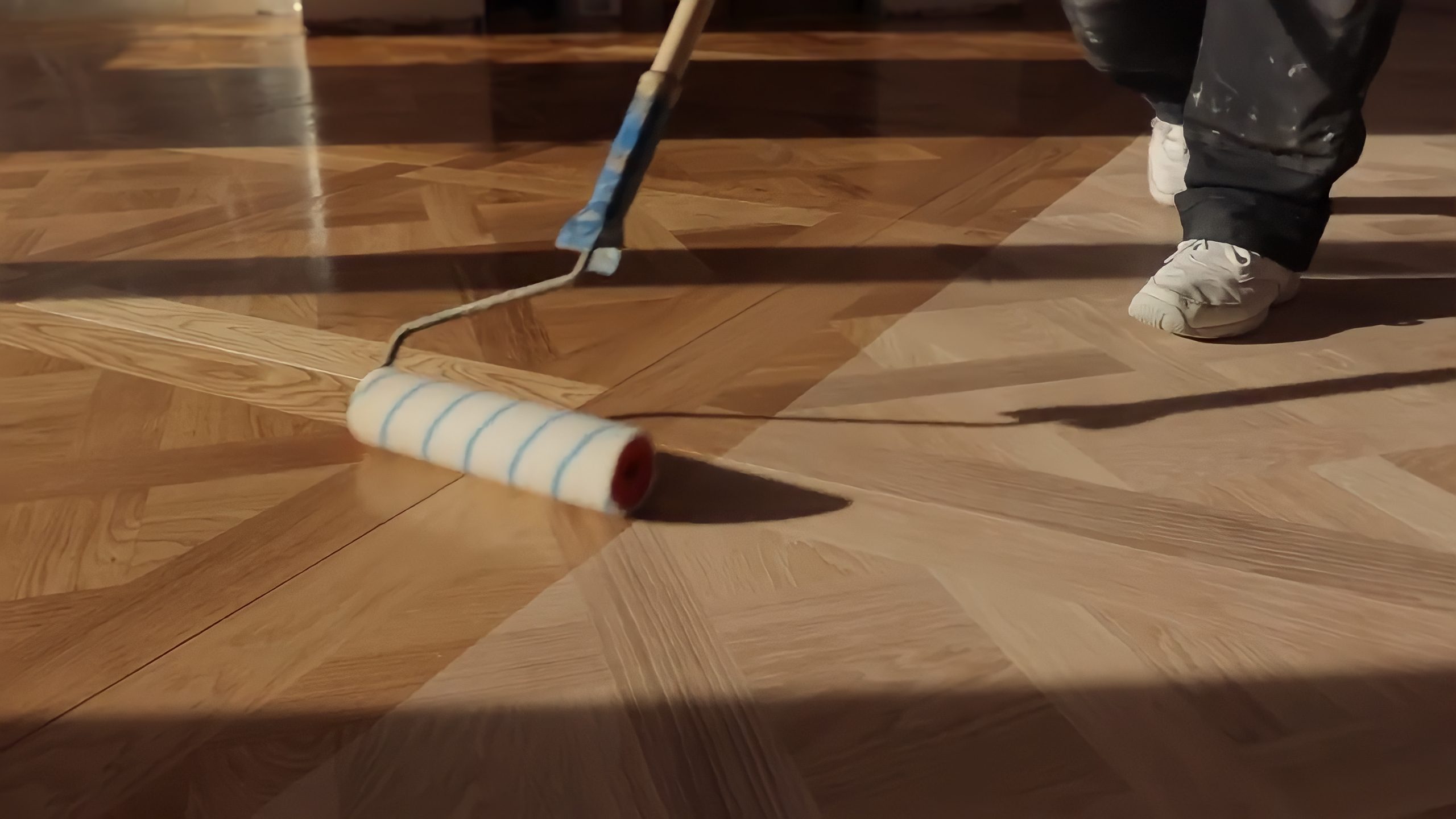
Solvent-based finishes dominated job sites for decades until Bona launched the first waterborne floor finish in 1979. Waterborne lacquers are now a standard choice for professional refinishing, with less odour and quicker drying than the old solvent coatings.
Hardwax oils offered another route. Osmo developed its Polyx-Oil in 1995, marketing it as the original hardwax oil, a blend of natural oils and waxes that soaks into the timber and can be spot repaired. In factories, heat-cured finishes began giving way to UV-cured urethanes in the mid-1980s, and UV curing remains the dominant factory method.
All of this gives homeowners far more control over the final look. A professional sanding and refinishing job can now end in a matt lacquer, a natural oil or a tinted stain, depending on how the room is used.
Dust-Free Sanding: A Real Health Improvement
Older sanding methods filled homes with fine dust, and that’s more than a cleaning issue. The Health and Safety Executive warns that hardwood dust can cause cancer, particularly of the nose, and UK workplaces must keep exposure below a legal limit of 3mg/m³ averaged over eight hours.
Modern sanders connect to extraction units that capture most of that dust at source. Bona introduced its Dust Containment System in 2006, and dust-controlled sanding has since become an expectation rather than an extra. For homeowners, it means a cleaner house during wood floor restoration and far less dust settling on furniture afterwards.
What 100 Years of Changing Flooring Techniques Means for Your Floor
Older floors are often more salvageable than people expect. Victorian softwood boards, 1930s parquet set in bitumen and 1970s strip floors hidden under carpet can usually be repaired, sanded and refinished with modern equipment. The key is understanding how the floor was originally laid, because that decides how it should be repaired and which finishes will bond to it.
Just Wood has been fitting and restoring wood floors since 1993, so our team has worked with almost every technique on this list. If you’ve uncovered an old floor under the carpet or you’re weighing up a new installation, get in touch and we’ll talk you through the options.
FAQs
How were wood floors installed 100 years ago?
In the 1920s, fitters cut and nailed boards by hand, usually onto timber joists over a ventilated void. Woodblock parquet was typically pressed into hot bitumen spread over a concrete base. The floor was then scraped smooth by hand and finished with shellac or wax.
When did floor sanding machines become common?
The first motorised floor sander was patented in 1909, but hand scraping was still normal into the 1920s. Sanding machines were in regular use by the 1940s, and edgers for reaching right up to the skirting were patented in 1931.
Can an old parquet floor laid in bitumen be restored?
Usually, yes. Loose blocks can be lifted, cleaned and bonded back down with a compatible modern adhesive, then the whole floor sanded and refinished. It’s best to have a specialist assess it first, as the condition of the bitumen affects the repair method.
What is the biggest change in flooring techniques over the last century?
Engineered boards and glueless click joints changed installation the most, making floating floors and underfloor heating practical. On the finishing side, the move from shellac and wax to polyurethane, waterborne lacquer and hardwax oil transformed durability and upkeep.
Is dust-free floor sanding completely dust free?
Not entirely, but modern extraction systems capture the large majority of dust at the machine. That makes a real difference to air quality and cleanup, which matters because hardwood dust is a recognised health hazard.